IAQ matters because it directly affects health, productivity, and overall well-being. Poor indoor air quality can lead to respiratory issues, allergies, and other health problems, impacting comfort and efficiency in both residential and commercial spaces. Maintaining good IAQ enhances the quality of life and promotes a healthier environment.
Indoor Air Quality Monitoring Singapore is crucial for maintaining productivity in workplaces. Schools can benefit from Indoor Air Quality Monitoring Singapore to protect students’ health. Implementing Indoor Air Quality Monitoring Singapore prevents respiratory issues in factories.
Offices: Good air quality directly correlates with cognitive performance. High carbon dioxide levels and poor ventilation cause lethargy, headaches, and decreased focus, severely impacting employee productivity and driving up absenteeism.
Schools: Developing children spend a vast portion of their day in classrooms. Tracking IAQ ensures a healthy learning environment, protecting students and staff from airborne allergens and respiratory illnesses.
Factories: Industrial processes often release fine dust, fumes, and localized chemical contaminants. Continuous monitoring is essential to prevent occupational respiratory hazards and maintain compliance with workplace safety standards.
Data Centers: While human health is a top priority, equipment health is equally critical. Sensitive IT infrastructures require stable microclimates; excessive particulate matter or improper humidity can cause static discharge, corrosion, and catastrophic server hardware failure.
Regular Indoor Air Quality Monitoring Singapore ensures clean air metrics are maintained.
Key IAQ Parameters
To successfully maintain clean indoor air, you must measure the specific metrics that dictate overall air quality. The table below outlines the primary parameters and their operational purpose:
Addressing local concerns requires Indoor Air Quality Monitoring Singapore as a proactive measure.
Parameter
Purpose
CO2 (Carbon Dioxide)
Ventilation: Acts as a primary indicator of fresh air exchange inside a building, flagging under-ventilated spaces before air becomes stale.
PM2.5 (Particulate Matter)
Airborne Particles: Monitors fine inhalable dust, smoke, and combustion particles that bypass human respiratory filters and cause long-term health issues.
TVOC (Total Volatile Organic Compounds)
Chemical Pollutants: Tracks chemical emissions and off-gassing from office furniture, carpets, cleaning agents, adhesives, and paints.
Humidity and Temperature
Comfort: Keeps ambient relative humidity and temperature within ideal ranges to maximize thermal comfort and suppress the growth of mold, bacteria, and dust mites.
Singapore IAQ Concerns
Indoor Air Quality Monitoring Singapore is essential during haze episodes in Singapore. Proper ventilation through Indoor Air Quality Monitoring Singapore can prevent Sick Building Syndrome. Sealed buildings need Indoor Air Quality Monitoring Singapore to ensure air quality standards. Green buildings benefit from Indoor Air Quality Monitoring Singapore for optimal energy use.
Operating an indoor space in Singapore brings a unique set of localized environmental challenges that facility managers must proactively address:
Smart systems for Indoor Air Quality Monitoring Singapore offer real-time data management.
Indoor Air Quality Monitoring Singapore: An Essential Tool
Haze: Periodic transboundary haze episodes introduce heavy concentrations of outdoor $PM_{2.5}$ into buildings. Tracking your indoor-to-outdoor pollutant ratio tells you exactly when to seals intakes and ramp up purification systems.
Ventilation: Due to the tropical heat, Singapore relies heavily on mechanical ventilation and air conditioning (MVAC) systems. Without regular air exchange monitoring, fresh air starvation can rapidly manifest as “Sick Building Syndrome.”
Enclosed Buildings: Many modern commercial spaces feature completely sealed building envelopes with fixed windows. This design places the entire burden of air purification and oxygenation on mechanical systems, leaving no room for manual airflow safety nets.
Green Buildings: As commercial properties push for BCA Green Mark certifications, striking the perfect equilibrium between energy-saving HVAC conservation strategies and adequate fresh air intake requires precise, data-driven IAQ monitoring.
Smart IAQ Monitoring Systems
Modern facility management has evolved past sporadic, manual spot-checks. Implementing an automated, smart IAQ ecosystem provides continuous, proactive protection.
IoT Dashboards
IoT-enabled environmental dashboards gather real-time data from all deployed sensors across your facility and centralize them onto a single screen. This interface allows facility teams to see live color-coded floor maps, view historical pollution trends, and quickly pinpoint exactly which zones require attention.
Remote Alerts
You do not need to constantly watch a screen to protect your facility. Smart systems allow you to set custom thresholds for parameter levels like CO2 or TVOC. If levels cross these safety limits, the system instantly sends SMS, email, or push notifications to facility managers so they can inspect ventilation systems or increase fresh air delivery right away.
Cloud Analytics
By archiving every air quality metric securely in the cloud, managers gain access to sophisticated analytics. These diagnostic tools allow you to spot long-term patterns—such as predictable $CO_2$ spikes in meeting rooms at specific times of the day—enabling you to program your HVAC systems more efficiently, saving energy without compromising air health.
Indoor Air Quality Monitoring
Building a compliant and healthy indoor workspace relies on using reliable, factory-calibrated testing instruments. Explore our professional monitoring range:
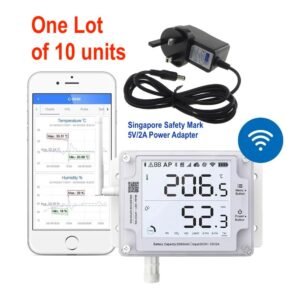
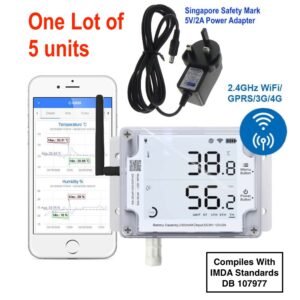
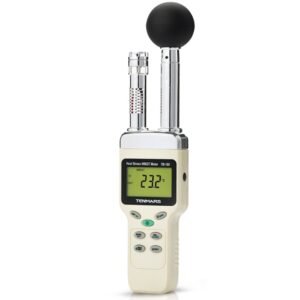
Smart IAQ Sensing Products: Browse our comprehensive range of high-precision, industrial-grade indoor air quality meters, multi-parameter environmental monitors, and portable testing equipment engineered to meet stringent technical standards.
FAQs
What is PM2.5?
PM2.5 refers to microscopic ambient particulate matter that has an aerodynamic diameter of less than 2.5 micrometers (roughly 30 times thinner than a human hair). Because these particles are so small, they can travel deep into the lungs and even enter the bloodstream, making them one of the most hazardous indoor air pollutants to human health.
What is a safe indoor CO2 level?
For indoor comfort and alertness, CO2 levels should ideally be maintained below 800 ppm (parts per million). According to Singapore’s SS 554 standard for indoor air quality, the maximum acceptable threshold for an air-conditioned office environment is 1,000 ppm. Any reading above this level indicates insufficient ventilation and a lack of fresh outdoor air exchange.
How often should IAQ be monitored?
While traditional regulations historically accepted annual or semi-annual physical spot-checks, modern workplace guidelines strongly advocate for continuous, real-time monitoring. Continuous tracking is the only way to detect transient pollution spikes, handle seasonal haze spikes, and ensure that your mechanical ventilation systems are performing optimally throughout the entire year.
Creating Healthier Workplaces with Real-Time IAQ Monitoring Solutions Indoor air quality (IAQ) has become a critical factor for modern offices, commercial buildings, and smart workplaces in Singapore. With employees spending most of their working hours indoors, organisations are increasingly investing…
UbiBot CO2 Monitoring System Adventure caving offers an exhilarating experience, a chance to explore the hidden wonders of the underground world. Each journey into the depths of a cave unveils breathtaking formations, ancient geological features, and unique ecosystems. However, this…