Effective Heat Stress Monitoring at Singapore Workplace
Heat stress monitoring helps reduce workplace heat-related illnesses by measuring environmental conditions such as WBGT, humidity, and temperature. Regular Heat Stress Monitoring Singapore is essential to implement best practices in safety measures.
By prioritizing Heat Stress Management for outdoor work with WBGT Monitoring, organizations can create a safer and more efficient workplace for all employees. Moreover, consistent Heat Stress Monitoring Singapore can help in identifying trends that require immediate attention.
Implementing effective Heat Stress Monitoring Singapore can safeguard employee health and maintain productivity in high-temperature environments while ensuring compliance with safety regulations. Understanding the benefits of Heat Stress Monitoring Singapore is crucial for sustainable workplace practices. With Heat Stress Monitoring Singapore, employers can take proactive measures to enhance worker safety.
Why Heat Stress is Serious in Singapore?
Heat stress is serious in Singapore due to its tropical climate, characterized by high humidity and temperatures averaging around 31°C (88°F). This can lead to heat-related illnesses, reduced work productivity, increased health risks, and strain on public health systems. Vulnerable populations, such as the elderly and outdoor workers, are particularly at risk. Prolonged exposure can cause heat exhaustion and heatstroke, necessitating public awareness and preventive measures.
Importance of Heat Stress Monitoring Singapore
In Singapore, heat stress is a critical occupational hazard that requires proactive tracking rather than seasonal attention.
Tropical Climate: Located just north of the equator, Singapore experiences high ambient temperatures and a persistently high relative humidity year-round. High humidity severely hinders the body’s natural cooling mechanism—the evaporation of sweat—making the environment feel significantly hotter than what a standard thermometer indicates.
Outdoor Industries: Thousands of workers operate daily in exposed conditions, working on construction scaffolds, shipyard decks, and roadside landscapes. These environments lack mechanical cooling and subject workers to intense, direct solar radiation.
Worker Safety: Failing to monitor extreme thermal conditions puts the workforce at severe risk. Implementing an objective monitoring system is essential to safeguard human health, maintain physical safety, and uphold statutory compliance.
Regular assessments through Heat Stress Monitoring Singapore mitigate health risks and enhance workforce morale. Employing Heat Stress Monitoring Singapore can significantly lower the risk of heat-related incidents.
Common Heat Stress Risks
To combat dehydration effectively, Heat Stress Monitoring Singapore should be prioritized in outdoor settings. Awareness around Heat Stress Monitoring Singapore can lead to faster response times for heat exhaustion cases. Implementing Heat Stress Monitoring Singapore is vital for preventing severe outcomes such as heat stroke.
When the human body absorbs more heat than it can dissipate, it enters a state of thermal distress, leading to a spectrum of debilitating health conditions: Specific industries in Singapore must adopt Heat Stress Monitoring Singapore to ensure long-term employee health.
Effective Heat Stress Monitoring Singapore can transform the safety culture across various sectors.
Dehydration: Rapid fluid loss through excessive sweating depletes the body of water and essential electrolytes. Left unreplenished, this triggers severe muscle cramps, dizziness, and intense physical fatigue.
Heat Exhaustion: A condition occurring when the body overheats. Symptoms include a rapid pulse, heavy sweating, nausea, headaches, and weakness. It serves as a critical warning sign that the individual must immediately be moved to a cool, shaded environment.
Heat Stroke: The most severe and life-threatening heat-related medical emergency. It occurs when the body’s internal core temperature spikes above 40°C. This can cause confusion, loss of consciousness, organ damage, and can be fatal if emergency medical treatment is delayed.
Reduced Productivity: On a macro level, thermal stress impairs cognitive function and physical endurance. Workers tire faster, lose focus, and make more operational errors, which directly drives down efficiency and increases workplace accidents.
Industries That Need Monitoring
A wide range of industrial and commercial sectors across Singapore rely on accurate heat stress monitoring to protect their teams and secure continuous operations: Heat Stress Monitoring Singapore is essential for maintaining optimal working conditions for warehouse staff.
In logistics, Heat Stress Monitoring Singapore can prevent accidents related to thermal stress.
Construction: Sites involve heavy manual exertion, safety gear that traps heat, and expansive areas exposed to raw sunlight and radiant heat from concrete or rebar.
Marine: Shipyards require personnel to work outdoors on vessel decks or inside confined, poorly ventilated steel hulls where temperatures can rise rapidly.
Warehousing: Large storage hubs often feature high zinc roofs that act as radiant heat conductors, creating uncomfortably warm interior environments for staff handling inventory.
Logistics: Fleet drivers, ground handlers, and loading dock personnel moving constantly between air-conditioned vehicles and hot, humid outdoor environments face continuous thermal shifts.
Landscaping: Maintenance crews, tree-care professionals, and general outdoor workers are directly exposed to peak solar radiation throughout the afternoon hours.
How WBGT Monitoring Helps?
Standard ambient thermometers only measure dry air temperature, which completely misses the cooling impact of wind speed and the suffocating load of high relative humidity. To reliably measure environmental heat stress, safety managers rely on the Wet Bulb Globe Temperature (WBGT) index.
WBGT combines air temperature, humidity, wind movement, and direct radiant heat into a single, comprehensive safety value. To learn more about how this composite index protects your workplace, read our detailed guide: What is WBGT?.
Real-Time IoT Heat Monitoring
Relying on sporadic manual checks with handheld meters can leave your workers exposed to shifting afternoon heat spikes. Modern industrial asset management utilizes continuous, automated frameworks.
Cloud Monitoring
Utilizing IoT for Heat Stress Monitoring Singapore enhances real-time safety measures in construction.
IoT-enabled environmental systems stream continuous heat indices from your job sites directly to a secure online platform. This eliminates error-prone manual paper logs, giving facility managers a live view of real-time thermal conditions across multiple worksites simultaneously.
Custom alerts in Heat Stress Monitoring Singapore ensure that supervisors can act swiftly to protect workers.
Alerts
Real-time data visualization through Heat Stress Monitoring Singapore makes it easier to plan labor schedules effectively.
You do not need to constantly watch a dashboard. Modern platforms let you set custom, multi-tiered safety thresholds. If a site’s WBGT reading enters a hazardous zone, the system immediately dispatches automated SMS, email, or push notifications to safety supervisors so they can enforce mandatory rest breaks or hydration intervals.
Dashboards
The unified cloud dashboard visualizes historical environmental data using clear charts and analytical trend lines. This lets you map exactly when heat stress risks peak during the day, helping you plan heavy labor schedules during cooler windows.
Investing in tools for Heat Stress Monitoring Singapore is crucial for protecting your workforce.
Remote Sensing
By using rugged, wireless, battery-powered IoT stations, you can deploy environmental sensors in deep industrial zones, high scaffolding, or remote fields. These stations handle the measurements autonomously, keeping safety teams out of hazardous areas. Learn more about deploying these frameworks on our [IoT Page].
Recommended Solutions
Building a compliant heat stress safety program requires industrial-grade, precision-calibrated testing instruments. Explore our professional monitoring range:
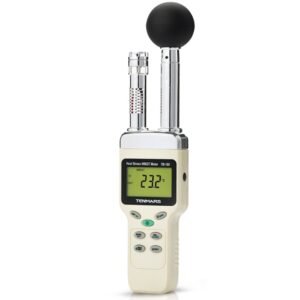
WBGT Products: Discover our comprehensive range of portable heat stress meters, handheld testing equipment, and precision-calibrated environmental instruments built to withstand harsh field environments.
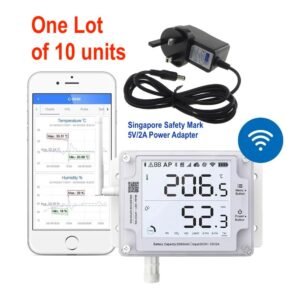
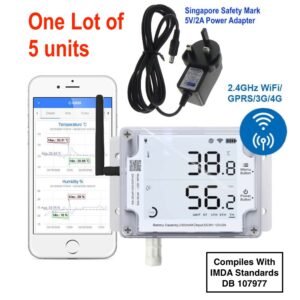
IoT Monitoring Systems: Explore our automated Environmental Data Surveillance Systems (EDSS™), featuring wireless long-range sensors and cloud-connected dashboards engineered for enterprise workplace safety.
FAQs
What are the Ministry of Manpower (MOM) guidelines for heat stress?
The Ministry of Manpower (MOM) requires workplaces to implement a comprehensive heat stress management framework. This includes conducting risk assessments, implementing mandatory rest-by-hourly intervals based on objective WBGT thresholds, providing cool drinking water, and establishing buddy systems to monitor outdoor workers for signs of heat distress.
Humidity plays a significant role in Heat Stress Monitoring Singapore as it hinders the body’s cooling process.
High humidity slows down the body’s ability to cool itself. When the air is saturated with moisture, sweat cannot evaporate efficiently off your skin. As a result, the body retains heat internally, causing your core temperature to rise faster and significantly increasing the risk of heat exhaustion, even at lower ambient air temperatures.
Can one central heat sensor cover an entire construction site?
Generally, NO. Heat conditions vary across large jobsites due to microclimates—such as shaded zones versus exposed concrete pads or areas surrounded by heat-retaining steel walls. To ensure complete safety, it is recommended to place sensors across distinct operational zones where your crews are actively working.
Maintaining accurate and up-to-date health records for students is a crucial task for primary / secondary schools, ITE and junior colleges (JCs). Traditional methods of manually measuring height and weight can be time-consuming, prone to errors, and disruptive to the…
Smart Indoor Air Quality Monitoring System for a Class A Office in Singapore Maintaining healthy indoor air quality (IAQ) has become a priority for commercial buildings, corporate offices, and facility managers across Singapore. Poor indoor air quality can impact employee…